
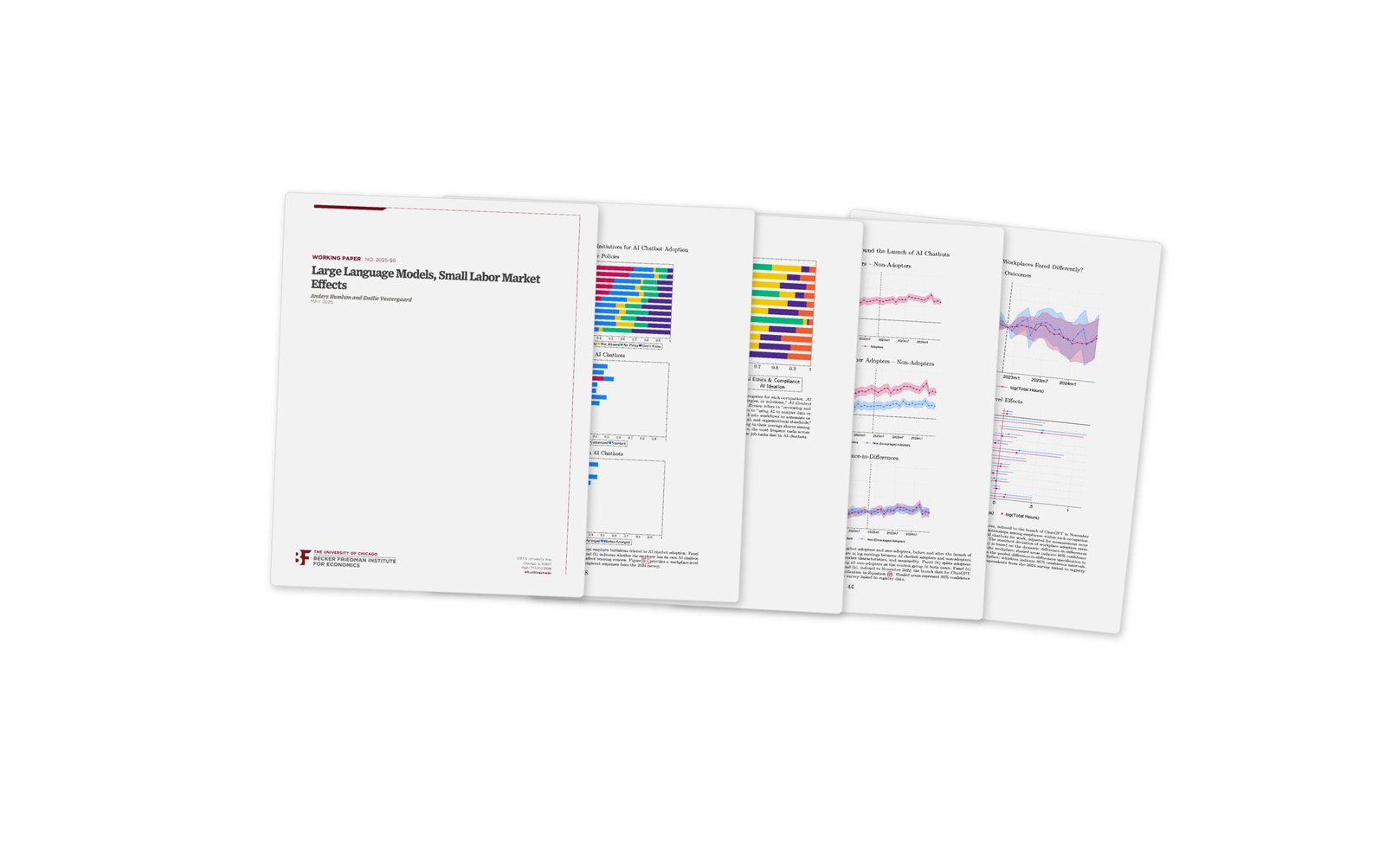
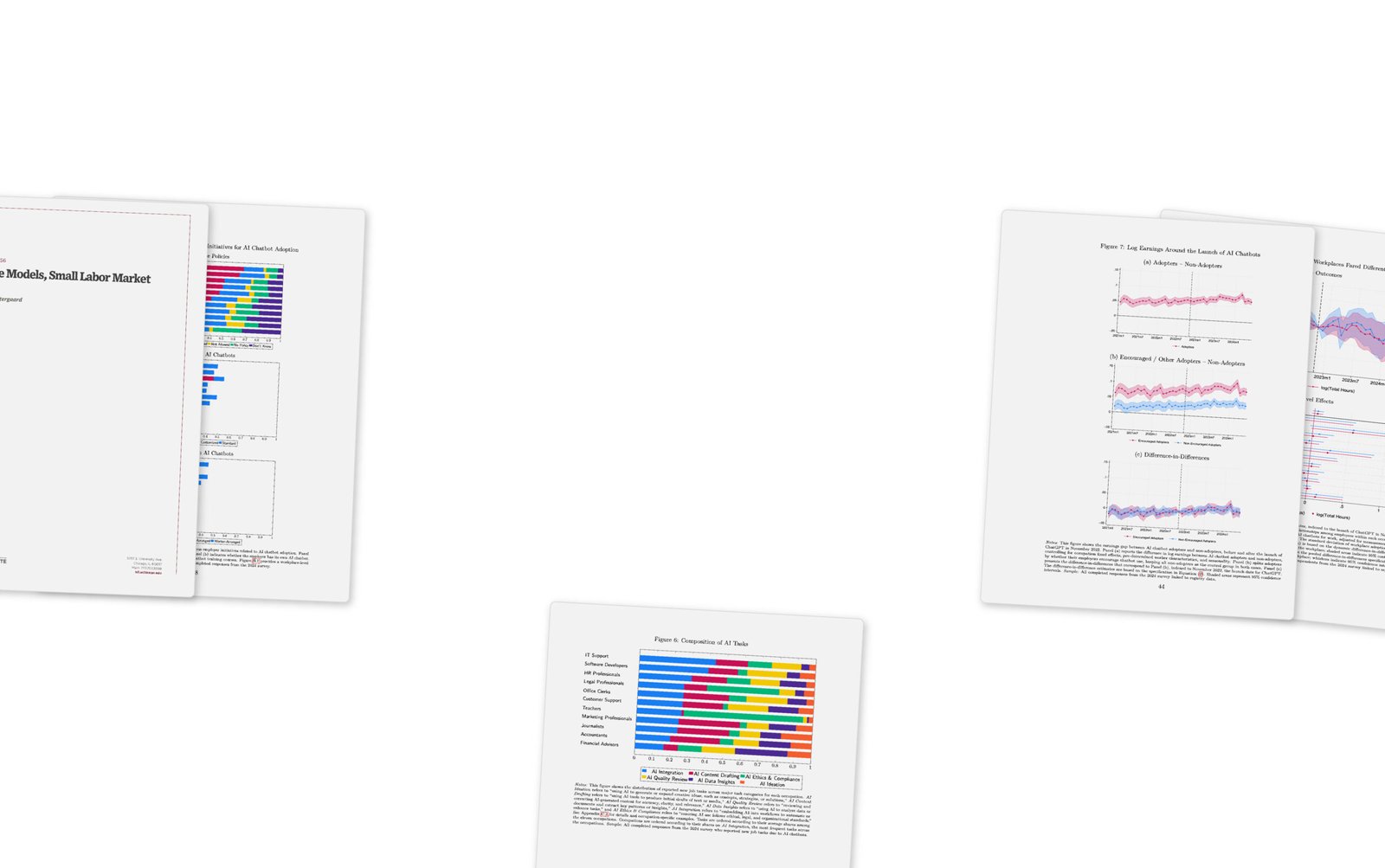



In Large Language Models, Small Labor Market Effects, the authors examine the labor market effects of AI chatbots.


In Large Language Models, Small Labor Market Effects, the authors examine the labor market effects of AI chatbots.
They begin by examining the role of firm-led investments, such as in-house chatbot models and training, in driving adoption.
Most employers encourage the use of AI chatbots.
Thirty-eight percent of workplaces have developed and deployed their own custom AI chatbots...
...and 30% of employees have received training in using AI chatbots.
Workplace initiatives like these drive widespread adoption.
For example, employer encouragement nearly doubles the share of workers who have ever used a chatbot from 46% to 83%.
Similarly, encouragement raises the share of workers using AI chatbots monthly, weekly, and daily.
Employer encouragement also narrows gender gaps in AI chatbot adoption, shrinking the gap from 12 to 5 percentage points.
Next, the authors investigate how using chatbots affects work processes.
Chatbots save workers time across all exposed occupations.
By contrast, their impact on work quality and job satisfaction varies by industry.
These benefits are 10%-40% greater when employers encourage their usage.
How do workers use the time they save with AI chatbots?
The vast majority of workers reallocate their saved time to other job tasks, while fewer than 10% use it for additional breaks or leisure.
And, 25% spend more time on the same tasks they initially saved time on, especially when employers actively encourage AI adoption.
Notably, AI chatbots have created new workloads for 17% of users.
Difference-in-differences estimates show that AI chatbots have had minimal impact on workers’ earnings...
...or on their hours worked.
These findings challenge narratives of imminent labor market transformation due to Generative AI.
While adoption has been rapid, with firms now heavily invested in unlocking the technological potential,the economic impacts remain small.

